
If You've Killed a Plant or Two… This Is the Garden That Forgives You.
Herbly gives first-time gardeners curated heirloom seed bundles and simple growing guidance that shows you what to plant, when to plant it, and how to keep it alive – without seed catalog overwhelm, gardening jargon, or pretending you already know what you're doing.
Start with one forgiving garden, one plain-English handbook, and one nearly forgotten idea: ordinary people used to grow real food at home all the time.
No 1,200-variety seed catalog.
No Latin plant lectures.
No guessing your way through the season.
Just one bundle. One sunny spot. One small garden you can actually grow.
What We Forgot
In the spring of 1943, Eleanor Roosevelt dug up a piece of the White House lawn and planted a vegetable garden.

Within a year, twenty million American families had done the same.
They called them Victory Gardens.
Backyards, rooftops, vacant lots, front lawns turned over to lettuce and squash.
School groups planted them in playgrounds.
Church basements ran canning workshops.
Neighborhood clubs swapped seeds at the end of every season.
By 1944, those twenty million home gardens were producing 40% of all the fresh fruits and vegetables Americans ate.1
In a country of 35 million households, roughly half of America was growing real food in its own yard.
This wasn't a hobby.
It was a normal Tuesday… for half of the country.
And then, after the war, we forgot.
Industrial farms got cheap.
Supermarkets became convenient.
By the 1970s, the gardens were almost entirely gone.
Today, fewer than 2% of Americans work in agriculture,2 and most of us have never grown a single thing we eat.
The capacity didn't disappear. The practice did.
What It Cost Us
A lot has changed since.
Most of what we eat now travels a long way before it reaches our kitchen table. Fruit from another country. Lettuce from another coast. Tomatoes picked before they're ripe so they can survive the trip.
That system made food feel convenient for a long time.
But it also made us dependent on something very far away.
Today, a storm, port closure, labor strike, fuel spike, or bad growing season can show up almost instantly in the grocery aisle. Prices rise. Shelves thin out. And the food we bring home often has a longer relationship with trucks, warehouses, and sprays than it does with the person eating it.
I'm not going to walk through the entire chemical side of conventional farming here. That's a longer story than this page needs to tell.
But the basic picture is hard to ignore:
- 75% of conventional fruits and vegetables have detectable pesticide residue.3
- The CDC found glyphosate – the active ingredient in Roundup – in the urine of most Americans tested, including children.4
- The World Health Organization's cancer research agency classifies glyphosate as "probably carcinogenic to humans."5
- Pesticide compounds have been detected in a meaningful share of American public drinking water wells.6
This is not a story about villains.
It is a story about scale.
When one way of growing, shipping, spraying, and selling food dominates a country's food supply, the side effects scale with it.
And somewhere along the way, most of us stopped growing even one small thing for ourselves.
So a Lot of Us Are Trying to Start Again
A lot of Americans look at all this and decide to plant something.
About 55% of US households now garden in some form.7
In 2020 alone, twenty million people started for the first time – the biggest surge in home gardening since 1944.8

Most of them quit within a year…
Why Most Beginners Fail
Not because they have a black thumb.
Not because they're not trying.
The gardening industry – the books, the YouTube channels, the seed catalogs with 1,200 varieties and Latin botanical names – were built for people who already know what they're doing.
The average home gardener loses about 35% of their plants every year.9
For first-year gardeners, the number is higher.
More than half of them give up before their first season ends.
The reasons are almost always one, if not all, of these:
Wrong plant for the wrong season. Warm-weather plants get planted while the nights are still too cold. Cool-weather greens get planted when the summer heat is already too intense. The plant fails before the gardener gets a chance.
Too many choices. A typical seed catalog carries 1,200 varieties. Almost none of them are sorted by how forgiving they are to a beginner.
Nobody explains the why. Most guides are written for people who already know the basics – so when they mention last frost dates, growing zones, seed depth, thinning, bolting, or open-pollinated varieties, they assume you already know what all of it means.
It isn't your fault that your last tomato died. It's that nobody set you up to win.
What Herbly Does
That's the gap we hope to close and the reason we started Herbly.
The same year Eleanor planted her garden, planning guides were mailed out across the country.
What to plant.
When to plant it.
How deep.
How far apart.
When to harvest.
How to save the seeds at the end.
The guides were the quiet half of the story.

Twenty million American families had never grown a thing before.
The guides closed that gap.
We built Herbly the same way.
Three heirloom seed bundles.
Each one curated for the plants a first-time gardener can actually keep alive.
One handbook, written for the person who has never planted a thing.
Not in Latin.
Not assuming you already know what "last frost" means in your zone.
Just the why behind every choice, so you understand what your plants need before they need it.
How Herbly Works
Pick the bundle that fits the way you want to eat: fresh salads, homemade salsa, or kitchen herbs within arm's reach.
Each bundle includes eight carefully chosen varieties – selected for flavor, usefulness, and what a first-time gardener can actually grow.
No guessing what to plant first, how deep to sow, when to water, or what to do when something looks off. The handbook walks you through the plants in your bundle, one step at a time.
Start small. Harvest what grows. Save seeds when you can. And begin picking back up the practice most of us were never taught.
Meet the Bundles
Three gardens. Each one is eight heirloom seed varieties, chosen for what a first-time gardener can actually grow, use, and feel proud of.
The Salad Garden
For the true beginner who wants a fast first win.
This is the easiest place to start: tender lettuces, quick-growing radishes, peppery greens, scallions, cucumbers, and cherry tomatoes chosen to help you harvest something fresh early in the season. These are forgiving, useful plants that give a first-time gardener momentum – and can turn one small sunny spot into a real homegrown salad in under six weeks.
See the 8 varieties inside
Buttercrunch Lettuce

- Tender heads with sweet, buttery flavor
- Forgives beginner watering mistakes
- Ready in 55-65 days
Buttercrunch Lettuce
Arugula

- Peppery, bright, and fast
- Ready in 21 days – fastest greens in the garden
- Young leaves mild, mature leaves sharp
Astro Arugula
Radish

- Ready in 22 days – three weeks seed to plate
- Crisp, mild, and slightly sweet
- Delicious raw, roasted, or pickled
Cherry Belle Radish
Cucumber

- Compact vines – perfect for pots or small beds
- One plant feeds daily salads all summer
- Crisp, mild, never bitter
Spacemaster Cucumber
Spinach

- Tender, mild leaves rich in nutrients
- Slow to bolt – stays useful into warm weather
- An heirloom classic since the 1820s
Bloomsdale Long Standing Spinach
Cherry Tomato

- Disease-resistant and prolific
- Small, sweet, and beginner-forgiving
- Wild ancestor of every cherry tomato
Matt's Wild Cherry Tomato
Bunching Onion

- Cut the green tops – plant keeps producing
- One packet feeds a household for months
- Mild sweet flavor for salads, eggs, or garnish
Tokyo Long White Bunching Onions
Simpson Lettuce

- Loose-leaf classic, ready in 28 days
- Cut the outer leaves – keeps producing for weeks
- Mild, sweet, buttery – the salad-bowl standard
Black Seeded Simpson Lettuce
If you've never gardened before, this is where to start.
The Salsa Garden
For the person who wants their first garden to end in taco nights, fresh bowls, and salsa that did not come from a jar.
This bundle brings together the warm-weather staples of a summer kitchen garden: tomatoes for body, tomatillos for bright green salsa, peppers for sweetness and heat, and herbs and scallions for the fresh top notes. It is built for the gardener who wants a clear payoff – the kind you can chop, mix, spoon over tacos, and bring to the table.
See the 8 varieties inside
Roma Tomato

- Meaty, low water – built for cooking down into salsa
- Wilt-resistant (VF) – survives the diseases that kill most tomato gardens
- The foundation of every real backyard salsa
Roma VF Paste Tomato
Jalapeño Pepper

- Classic medium heat (2,500-8,000 Scoville)
- Productive and prolific – one plant, dozens of peppers
- Pick green for medium heat, red for sweeter and hotter
Jalapeño M Pepper
Garlic Chives

- Mild garlic flavor without growing whole garlic bulbs
- Perfect for people who don't love cilantro
- Snip directly into the salsa bowl
Geisha Garlic Chives
Chocolate Bell Pepper

- Heirloom dark-brown bell pepper
- Compact plant – no staking needed
- Sweet, mild, striking in fresh salsa
Miniature Chocolate Bell Pepper
Tomatillo

- The foundation of every great salsa verde
- Two plants feed an entire salsa season
- Husked, tart, and easy to grow
Toma Verde Tomatillo
Cilantro

- The cilantro that doesn't bolt in two weeks
- Lasts twice as long as standard cilantro
- Cut and it keeps giving you leaves
Slow Bolt Cilantro
Bunching Onion
- The salsa scallion – bright top notes on every bowl
- Cut the greens – the white base regrows for months
- Milder and cleaner than a grocery scallion
Tokyo Long White Bunching Onions
Cherry Tomato
- The sweet pop for fresh pico de gallo
- Disease-resistant, prolific, beginner-forgiving
- Small, sweet, and hard to kill
Matt's Wild Cherry Tomato
By late summer, you're not just buying salsa at the grocery store. You're making it.
The Kitchen Herb Garden
For the cook who wants fresh flavor within arm's reach.
This is the garden that makes everyday food taste more alive: basil for pesto and pasta, parsley for almost everything, cilantro for tacos and bowls, rosemary, sage, and thyme for slow Sunday meals, oregano for pizza and sauces, and chives for eggs, potatoes, and soups. It is built for small spaces, frequent harvests, and the end of buying herb bunches that wilt before you use them.
See the 8 varieties inside
Basil

- Classic Italian pesto basil
- One plant gives you a summer of fresh pesto
- Big, soft, fragrant leaves
Genovese Basil
Parsley

- Flat-leaf parsley used in nearly every cuisine
- Cleaner, brighter flavor than curly
- Cut and it comes back – almost indefinitely
Plain / Single Parsley
Thyme

- Cold-hardy – survives mild winters as a perennial
- Tiny, woody, intense leaves
- Finishes roast chicken, eggs, and slow Sunday meals
German Winter Thyme
Oregano

- The real Mediterranean oregano – not the grocery-jar kind
- Sharper, more concentrated flavor
- Dries beautifully and keeps for years
Greek Oregano
Rosemary

- Evergreen woody shrub – lives for years once established
- Fresh rosemary on demand for potatoes, lamb, and bread
- Thrives on neglect
Common Rosemary
Chives

- Perennial – comes back every year
- Mild onion flavor for baked potatoes, eggs, and soup
- Bright purple flowers are edible too
Common Chives
Sage

- Fuzzy gray-green leaves with a strong, savory bite
- Defines roasted poultry, brown-butter pasta, and stuffing
- Drought-tolerant – thrives on neglect
Broad Leaved Sage
Cilantro
- Doesn't bolt in two weeks like standard cilantro
- Lasts twice as long in the herb bed
- Cut and it keeps producing leaves
Slow Bolt Cilantro
The end of $3 grocery bunches that wilt in three days.
The Handbook
Every bundle comes with a digital handbook written specifically for the plants in your box.
The Salad Garden handbook walks you through lettuce, radishes, cucumbers, scallions, spinach, arugula, and tomatoes – when to sow each one, how deep to plant, what to watch for, and how to keep your first harvest moving.
The Salsa Garden handbook guides you through tomatoes, peppers, tomatillos, cilantro, scallions, and garlic chives – from warm-season planting to the little signs that tell you your garden is ready for salsa season.
The Kitchen Herb Garden handbook teaches the herbs in your box – when to start them, how to harvest them, how to keep them producing, and how to use them before they ever wilt in the fridge.
The plants in your bundle are the plants the handbook teaches.
Inside, every handbook covers:
- A full plant profile for every variety
- A no-jargon glossary explaining every gardening term in plain English
- A sowing calendar for your zone
- Troubleshooting for the most common beginner failures
- A seed-saving guide so next year costs nothing
And if you get stuck mid-season – seeds that won't sprout, leaves turning yellow, herbs wilting, or a plant that suddenly stops looking right – every Herbly email has a real person on the other end.
You hit reply. We answer.
That part isn't a feature. It's just how this works.
What You Need
A Herbly garden does not ask you to overhaul your backyard.
- You do not need a greenhouse.
- You do not need raised beds.
- You do not need expensive tools.
- You do not need to already know what you're doing.
You just need a sunny spot, a container or small patch of soil, basic garden soil, water, and the bundle that fits the way you want to eat.
The handbook takes it from there – showing you when to plant, how deep to sow, how to care for each variety, and what to do when your garden starts asking questions.
One sunny spot is enough to begin.
Pick Your First Garden.
Free shipping. 30-day guarantee. Ships in 3-5 business days from our Florida garden.
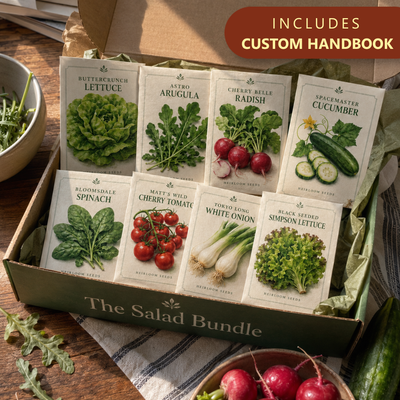
- Buttercrunch Lettuce
- Astro Arugula
- Cherry Belle Radish
- Spacemaster Cucumber
- Bloomsdale Spinach
- Matt's Wild Cherry Tomato
- Tokyo Long White Onion
- Black Seeded Simpson Lettuce
Beginner-friendly. Salad on the table in six weeks.
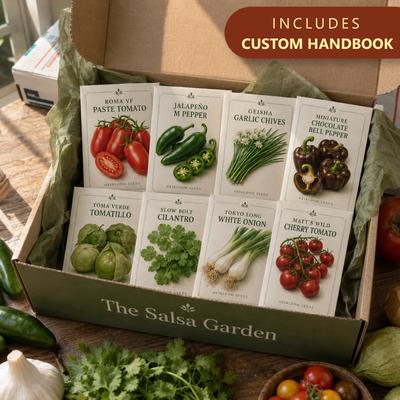
- Roma VF Paste Tomato
- Jalapeño M Pepper
- Geisha Garlic Chives
- Miniature Chocolate Bell Pepper
- Toma Verde Tomatillo
- Slow Bolt Cilantro
- Tokyo Long White Onion
- Matt's Wild Cherry Tomato
Homemade salsa by late summer.
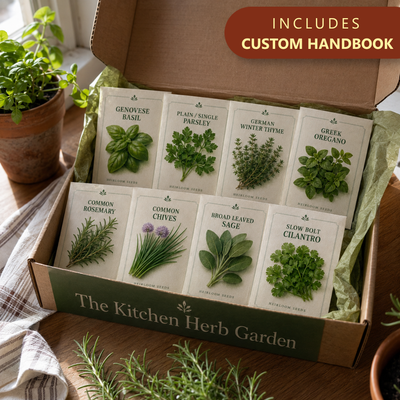
- Genovese Basil
- Plain / Single Parsley
- German Winter Thyme
- Greek Oregano
- Common Rosemary
- Common Chives
- Broad Leaved Sage
- Slow Bolt Cilantro
Fresh flavor for eggs, sauces, and Sunday roasts.
Sending as a gift? Add gift wrap at checkout.
Free shipping · 30-day guarantee · Founder replies personally
Every bundle packed by hand from our small Florida garden.
FDACS Registered Florida Seed Dealer, License #S003290
A Few Practical Things
Every Herbly bundle is packed by hand by our small Florida team and ships in 3-5 business days.
And if your bundle doesn't meet expectations for any reason, we make it right.
Replacement, refund, or store credit – your call.
No need to mail anything back.
You have 30 days from the day your order arrives.
One bundle. One sunny spot. One small garden you can actually grow.
Choose Your First GardenA Small Act, Well Taught
A Victory Garden in 1943 was one small act.
One backyard.
A few rows of tomatoes.
A patch of lawn turned into lettuce.
The thing it added up to – 40% of the country's fresh produce, in two years – was made out of millions of small acts.
None of them, on their own, looked like much.
We didn't lose the capacity to grow our own food.
We lost the practice.
And the practice is something a person can pick back up in an afternoon.
That's what we built Herbly for.
One bundle. One sunny spot. One handbook written to meet you where you are.
Grow Something Good.
Three small gardens. Three delicious reasons to start.
Grow something good.
Questions Worth Asking
I've never gardened before. Is this really for me?
Yes. That's who we built it for.
The plants in every Herbly bundle were chosen because they forgive beginner mistakes.
The handbook was written for the person who has never planted a thing.
Even if you have killed houseplants, forgotten seedlings, or bought herbs that wilted in three days, Herbly was built to help you start again with plants that are easier to grow and instructions that actually explain what to do.
What if I don't have a yard?
The Salad Garden and the Kitchen Herb Garden both grow in pots.
A sunny windowsill, a balcony, or a few containers on a back porch is all you need.
The handbook covers container growing for every variety.
The Salsa Garden needs more room – tomato plants and tomatillos get tall – but five-gallon pots work if a yard is not available.
When should I plant these seeds?
That depends on your zone and your bundle.
Salad varieties are cool-weather crops – spring and fall.
Salsa varieties are warm-weather – plant after your last frost.
Herbs are flexible.
The handbook walks you through the sowing calendar for the part of the country you live in.
You'll know exactly what to do, and when, the moment you open it.
How long until I can actually harvest something?
Radishes are ready in three weeks.
A full homegrown salad is on the table in six weeks.
Cherry tomatoes start producing in late summer.
Most herbs are usable in four to six weeks from seed.
The slowest part is waiting for the first thing to come up. The fastest is everything after that.
What if some of my seeds don't germinate?
Every Herbly seed is professionally tested for germination before we pack it.
If a packet underperforms, we replace it.
If a whole bundle underperforms, we make it right with a refund, replacement, or store credit.
Just reply to your order email.
Are these organic?
No. These are heirloom open-pollinated seeds, which is a different thing.
Heirloom means the seeds you save from your harvest will grow into the same plant next year.
Open-pollinated means they were not bred in a corporate lab.
They were bred by gardeners – often over generations – for flavor, resilience, and the way they actually grow at home.
When you grow at home, you decide whether anything gets sprayed on the plants. That's the part of the chemical story you control.
Why heirloom?
Because heirloom seeds let the garden keep going.
Most commercial seeds are hybrids, which means they were intentionally crossed from two parent plants to create a specific result: size, shelf life, disease resistance, uniformity, or higher yield.
Hybrid seeds can grow beautiful plants, but the seeds you save from them usually do not "breed true."
Plant them next year, and you may get something unpredictable – a weaker plant, a different flavor, or a harvest that does not look like what you grew the first time.
Heirloom seeds are different.
They are open-pollinated varieties that have been stabilized and passed down over time.
When you save seeds from an heirloom tomato, lettuce, pepper, herb, or radish, those seeds are much more likely to grow back into the same plant next season.
That means one packet can become more than one season of food.
It can become a garden you keep, save from, share, and grow again – year after year.
Can I give this as a gift?
Yes. Herbly makes a thoughtful gift for the person who has always wanted to garden but never knew where to start.
Each bundle gives them a simple first garden, heirloom seeds chosen for beginners, and a handbook that walks them through what to plant, when to plant it, and how to keep it growing.
At checkout, you can also upgrade to gift wrap so it arrives ready to give.
It's a sweet gift for a grandparent, a new homeowner, a friend with a sunny windowsill, or anyone who has ever said, "I've always wanted to start a garden."
Sources
- Smithsonian Gardens, "Victory Gardens"; National WWII Museum, "Victory Gardens: Food for the Fight" (1943–1944 peak data).
- USDA Economic Research Service, Agriculture Employment Chart.
- Environmental Working Group, 2024 Shopper's Guide to Pesticides in Produce.
- Centers for Disease Control and Prevention, National Health and Nutrition Examination Survey (NHANES) glyphosate data.
- International Agency for Research on Cancer (WHO), Monograph on Glyphosate, 2015 – Group 2A classification.
- US Geological Survey, Pesticides in the Nation's Streams and Ground Water report.
- National Gardening Association, 2024 National Gardening Survey.
- Bonnie Plants, 2020 Consumer Gardening Survey.
- Home Advisor, US Gardener Survey – average annual plant loss.